Refractory Angina
Ongoing angina despite maximally tolerated medical therapy.

Vasoflo provides medically supervised Enhanced External Counterpulsation therapy for selected patients with chronic angina, coronary artery disease and persistent symptoms despite optimal medical therapy.
EECP may be considered for patients with chronic ischaemic heart disease who remain symptomatic despite guideline-directed medical therapy, particularly where further revascularisation is not indicated or feasible.
Common referral profiles include:
Ongoing angina despite maximally tolerated medical therapy.
Coronary anatomy not suitable for further PCI or CABG.
Persistent symptoms following PCI or CABG where further intervention has been reviewed.
Patients in whom further invasive intervention is not feasible, not indicated or carries unfavourable risk.
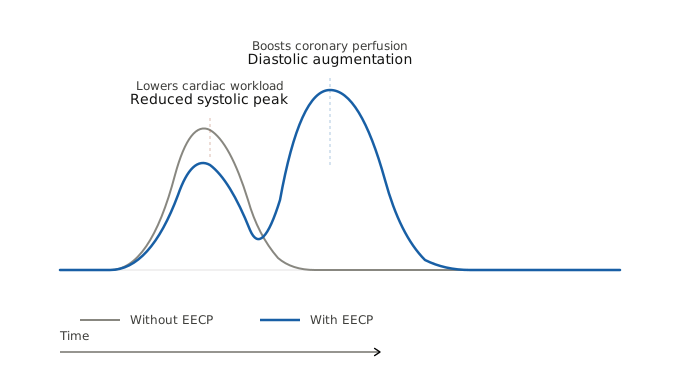
EECP uses ECG-gated sequential pneumatic compression to produce diastolic augmentation and pre-systolic unloading.
Three sets of cuffs are applied to the calves, thighs and hips/buttocks. The cuffs inflate sequentially during diastole and deflate rapidly before the next ventricular contraction.
Key physiological effects include:
Stylised timing diagram: sequential inflation during diastole; simultaneous deflation (red bars) immediately before systole.
EECP has been evaluated across multiple decades, including the MUST-EECP randomised sham-controlled trial, the International EECP Patient Registry, and a range of observational and physiological studies.
Published evidence has reported improvements in angina burden, exercise tolerance, Canadian Cardiovascular Society angina class and quality-of-life measures following a structured EECP course. The evidence is strongest in chronic and refractory angina populations. Evidence is presented conservatively, with full references available.
View Clinical EvidenceMUST-EECP Trial
Randomised, sham-controlled study evaluating EECP in chronic stable angina.
International EECP Patient Registry
Large multicentre registry reporting real-world outcomes, including angina class, quality of life and treatment tolerance.
Angina and Functional Capacity
Studies have reported improvements in exercise duration, symptom burden and CCS angina class in selected patients.
Quality of Life
Published data have described improvements in patient-reported physical limitation, angina frequency and functional status.
Endothelial and Vascular Effects
Physiological studies have reported changes in flow-mediated dilation, vascular tone and shear-stress related markers.
If you or a family member is interested in EECP, the first step is to speak with your cardiologist or general practitioner. A referral with relevant clinical information is required, and your treating doctor will determine whether EECP is appropriate for your situation.
Vasoflo works with your treating doctor to support your existing cardiac management plan.
Patient information pageEECP is an adjunctive therapy — it complements your existing cardiac management rather than replacing it. Your treating doctor remains responsible for decisions about medications, procedures and long-term cardiac care. EECP does not replace guideline-directed medical therapy, cardiac rehabilitation, PCI, CABG or specialist cardiology care where these are clinically indicated.